Where Three Worlds Met: David Rogers Traces Music Back to Its Source
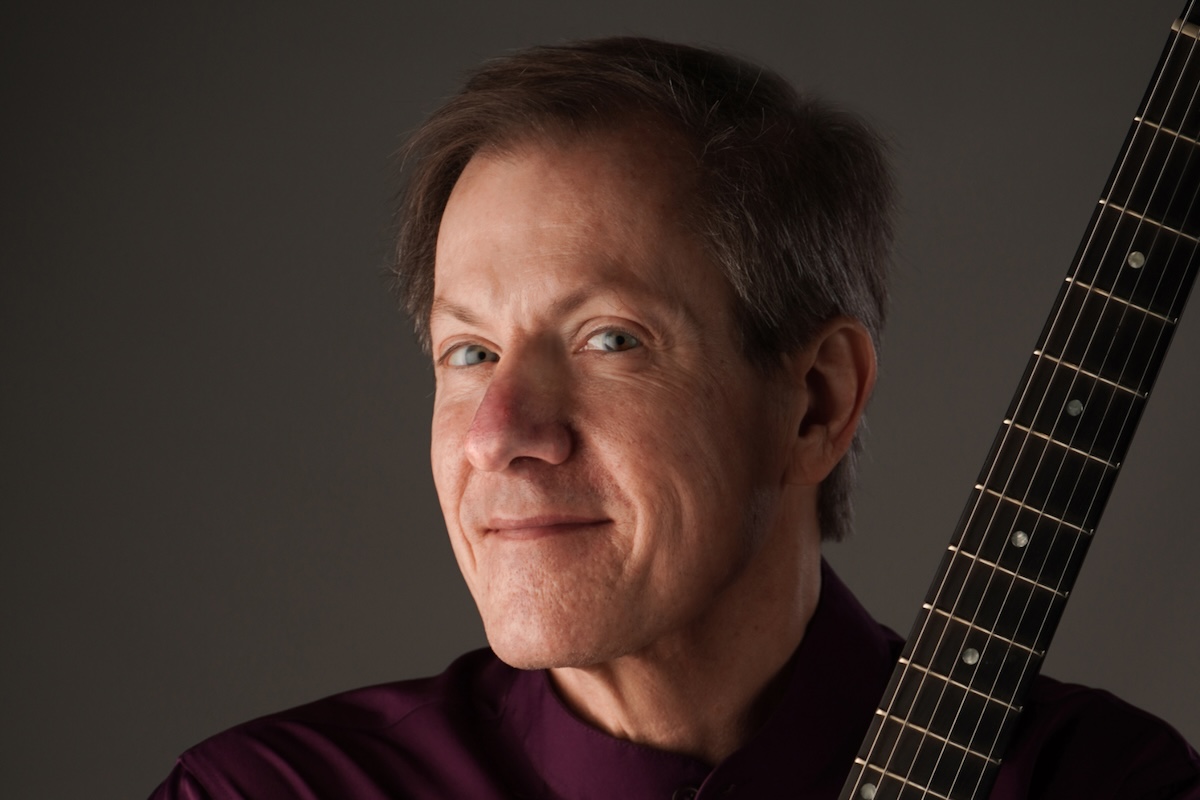
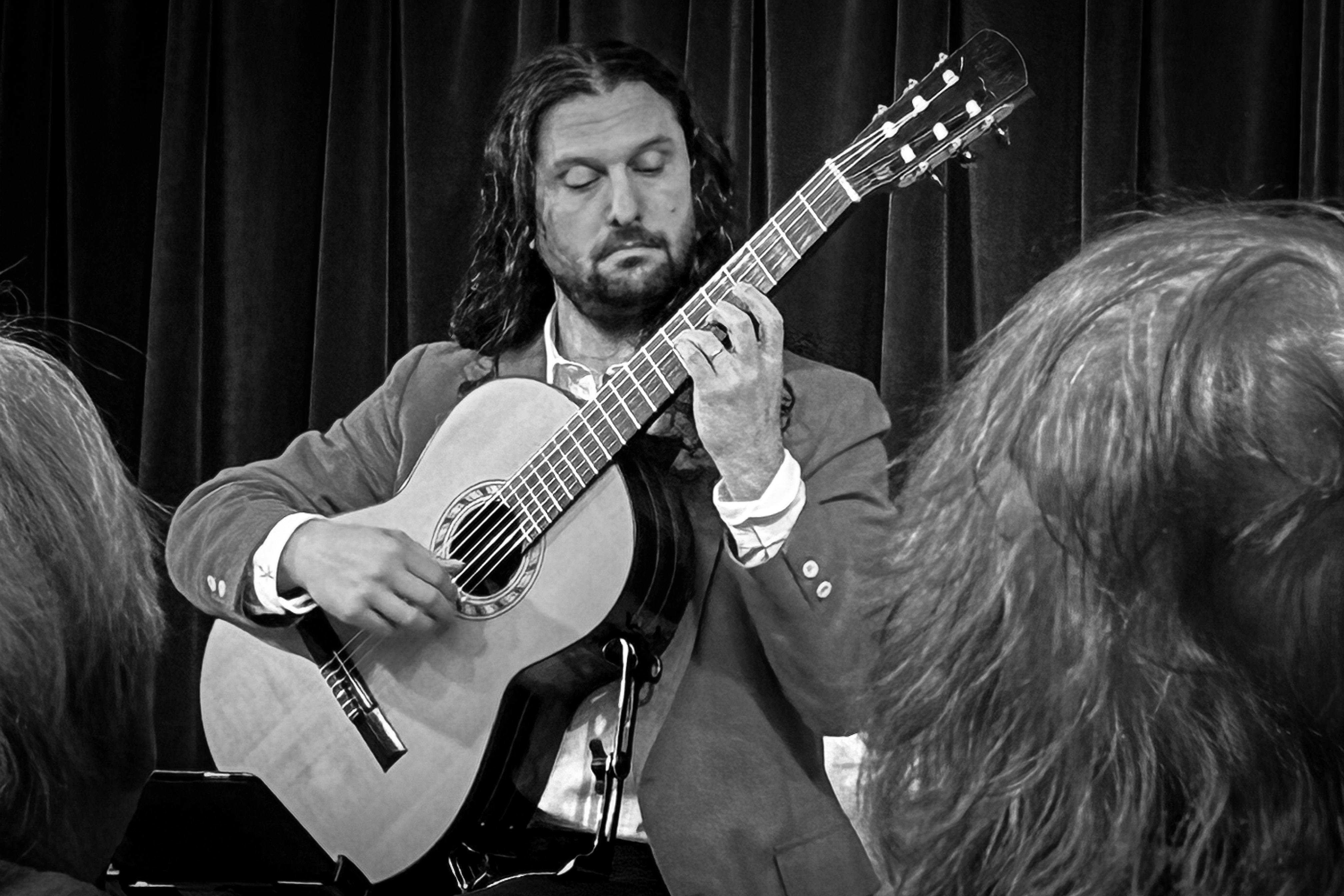
There were already musicians in the house: his mother and grandmother at the keyboard, his father on trombone. David Rogers watched them and made a decision; he didn't want to imitate what they did. He wanted something entirely his own. What followed was decades of curiosity that moved outward through folk, jazz, classical, and the lute, and eventually backward, into the music of a Spain that no longer exists. Rogers performs at Wellfleet Preservation Hall on May 1st, tracing the Andalusian roots of flamenco and Spanish classical music through a program that begins centuries before the guitar was the guitar.
TL;DR
How did David Rogers end up on the guitar rather than the piano?
He grew up surrounded by musicians: his mother and grandmother played keyboard, his father played trombone. But watching the pianists in his family play so well pushed him in the opposite direction. He wanted an instrument that was entirely his own. The guitar, a plucked string instrument where sound is pulled directly from the instrument by hand, gave him that. He started on baritone ukulele at eight and moved to guitar a few years later.
What is the Music of Arabian Spain program about?
The program traces the roots of Spanish music back to Andalusia before the Spanish Inquisition, a time when Jewish, Muslim, and Christian communities coexisted in southern Spain, each carrying distinct musical traditions. Sephardic songs in Ladino, North African and Middle Eastern influences, and early European forms all existed in proximity, reshaping each other over time. When those communities were displaced, the music traveled with them into North Africa and across the Mediterranean. The first half of the program lives in that world. The second half moves into Spanish classical music and flamenco, connecting the modern repertoire back to those older roots.
How does Rogers connect jazz improvisation to early music?
Rogers sees jazz and early music as variations on the same instinct rather than separate traditions. In the 16th century, a chord progression was a starting point; improvisation was built into the music, not added to it. J.S. Bach was known as much for his organ improvisations as for his compositions. Rogers, who has played jazz throughout his career, found that the further back he followed the classical tradition, the more familiar it felt.
Who are his biggest musical influences?
Rogers points to two guitarists in particular: John McLaughlin and Ralph Towner, the guitarist behind the jazz group Oregon, who passed away recently. Rogers brought Towner in to work with his students once, a workshop built around different solos, and had been puzzling over a particular Towner chord for years. That day, he finally got to the bottom of it. Beyond jazz and classical, Rogers listens widely: lute concerti, techno, whatever pulls his ear. He has been playing and composing since the beginning, always making something.
What should an audience expect at Wellfleet Preservation Hall?
A single guitarist moving across centuries of music without announcing the transitions, from early Sephardic and Andalusian traditions through Spanish classical and flamenco. Rogers has been called "a prominent guitarist" by the New York Times and praised by the Washington Post for his "astonishingly florid" improvisations. The program is as much a listening journey as a performance, and the throughline is continuity rather than genre. It rewards attention.
TL;DR
How did David Rogers end up on the guitar rather than the piano?
He grew up surrounded by musicians: his mother and grandmother played keyboard, his father played trombone. But watching the pianists in his family play so well pushed him in the opposite direction. He wanted an instrument that was entirely his own. The guitar, a plucked string instrument where sound is pulled directly from the instrument by hand, gave him that. He started on baritone ukulele at eight and moved to guitar a few years later.
What is the Music of Arabian Spain program about?
The program traces the roots of Spanish music back to Andalusia before the Spanish Inquisition, a time when Jewish, Muslim, and Christian communities coexisted in southern Spain, each carrying distinct musical traditions. Sephardic songs in Ladino, North African and Middle Eastern influences, and early European forms all existed in proximity, reshaping each other over time. When those communities were displaced, the music traveled with them into North Africa and across the Mediterranean. The first half of the program lives in that world. The second half moves into Spanish classical music and flamenco, connecting the modern repertoire back to those older roots.
How does Rogers connect jazz improvisation to early music?
Rogers sees jazz and early music as variations on the same instinct rather than separate traditions. In the 16th century, a chord progression was a starting point; improvisation was built into the music, not added to it. J.S. Bach was known as much for his organ improvisations as for his compositions. Rogers, who has played jazz throughout his career, found that the further back he followed the classical tradition, the more familiar it felt.
Who are his biggest musical influences?
Rogers points to two guitarists in particular: John McLaughlin and Ralph Towner, the guitarist behind the jazz group Oregon, who passed away recently. Rogers brought Towner in to work with his students once, a workshop built around different solos, and had been puzzling over a particular Towner chord for years. That day, he finally got to the bottom of it. Beyond jazz and classical, Rogers listens widely: lute concerti, techno, whatever pulls his ear. He has been playing and composing since the beginning, always making something.
What should an audience expect at Wellfleet Preservation Hall?
A single guitarist moving across centuries of music without announcing the transitions, from early Sephardic and Andalusian traditions through Spanish classical and flamenco. Rogers has been called "a prominent guitarist" by the New York Times and praised by the Washington Post for his "astonishingly florid" improvisations. The program is as much a listening journey as a performance, and the throughline is continuity rather than genre. It rewards attention.
There were already musicians in the house.
His mother and grandmother at the keyboard. His father on trombone. Music wasn't something the Rogers family attended; it was output and expression. For a kid growing up in Detroit with instruments from room to room and two generations of pianists at the keys, the natural thing would have been to sit down at the bench and follow them.
David Rogers did not do the natural thing.
He watched his mother and grandmother play and made a decision that was almost less about the guitar than it was about the method He wanted something more immediate. A physical act. A plucked string. Sound pulled directly from the instrument by hand rather than the separation of a key and a hammer. That was his own thing.
He started on baritone ukulele at eight. Guitar came a few years later. And from there the path moved the way it tends to for musicians who are genuinely curious: outward rather than inward. Folk. Rock. Pop. Violin lessons that progressed through serious study. Then jazz. Then classical. Each widening the frame.
Then, eventually, the lute. And the question that would shape everything that followed.
•••
Where did this music actually come from?
For Rogers, that question wasn't academic; it was the natural next step for someone who had already moved through jazz improvisation and classical structure and found that the two traditions weren't opposites. They were variations on the same instinct: a framework, and something happening inside it.
The lute pulled him further back. Into early European forms. Into a period when a chord progression wasn't a fixed object but a starting point, when improvisation wasn't a stylistic choice but an expectation built into the music itself. J.S. Bach, Rogers will tell you, was known as much for his organ improvisations as for his compositions. The written work was only part of what he did and wasn't what they packed the seats to hear.
Following that thread backward leads, inevitably, to Andalusia.
•••
The program Rogers brings to Wellfleet Preservation Hall on May 1st is built around the music of southern Spain: not modern Spain as a unified identity, but an earlier version. A convergence point.
Before the Spanish Inquisition, before Ferdinand and Isabella reshaped the Iberian peninsula, Andalusia was the Islamic heart of Spain and a place where Jewish, Muslim, and Christian communities existed in genuine proximity. Sephardic songs in Ladino carried Jewish diaspora culture. North African and Middle Eastern traditions moved through Islamic Spain. European forms evolved alongside them.
It wasn't fusion in the way that word now is most often used now. It was proximity: a shared geography where musical ideas moved freely and reshaped each other over time. When those communities were displaced, the music traveled with them. Into North Africa, into the Maghreb, across the Mediterranean. The Andalusian tradition became the seed culture for what those regions carried forward.
The first half of Rogers' program lives in that world. The second half moves into more familiar territory: Spanish classical music, flamenco, the modern guitar repertoire. But by then the context has shifted. What sounds contemporary carries traces of what came before.
The through-line, Rogers says, is continuity rather than genre.
•••
Outside of performance, Rogers has spent decades teaching both classical and jazz guitar, 13 years on faculty at Southern Oregon University among them, and his influences read like a map of the instrument's full range. The New York Times has called him "a prominent guitarist." The Washington Post praised his "astonishingly florid" improvisations.
Two musicians he mentions and returns to as touchstones: John McLaughlin and Ralph Towner, the guitarist behind the jazz group Oregon, who passed away recently. Rogers had brought Towner in to work with his students once, the workshop built around different solos, everyone pulling something different out of the same tradition. There was a chord of Towner's that Rogers had been puzzling over for years. That day, he finally got to the bottom of it.
He still plays jazz. Still listens widely: lute concerti, techno (the Detroit-Berlin connection runs deep for someone who grew up there), whatever pulls his ear.
Still making things. Still following the thread.