“Are we still talking about this?” That was the reaction when we’d heard about this a month or so ago. We’re not exactly taking knife hits down here in the HyperLocal offices but that doesn’t make any difference, retail dispensaries were legal, business was booming, move on, narcs.
This new vote would put into play the legality (and survival) of the ~400 retail dispensaries across MA. There are some nuances to it: medicinal marijuana would be an exception, possession up to a certain amount wouldn’t be prosecuted, but still … hadn’t the votes already been secured to pass this law and get recreational grass to whoever was old enough and wanted it?
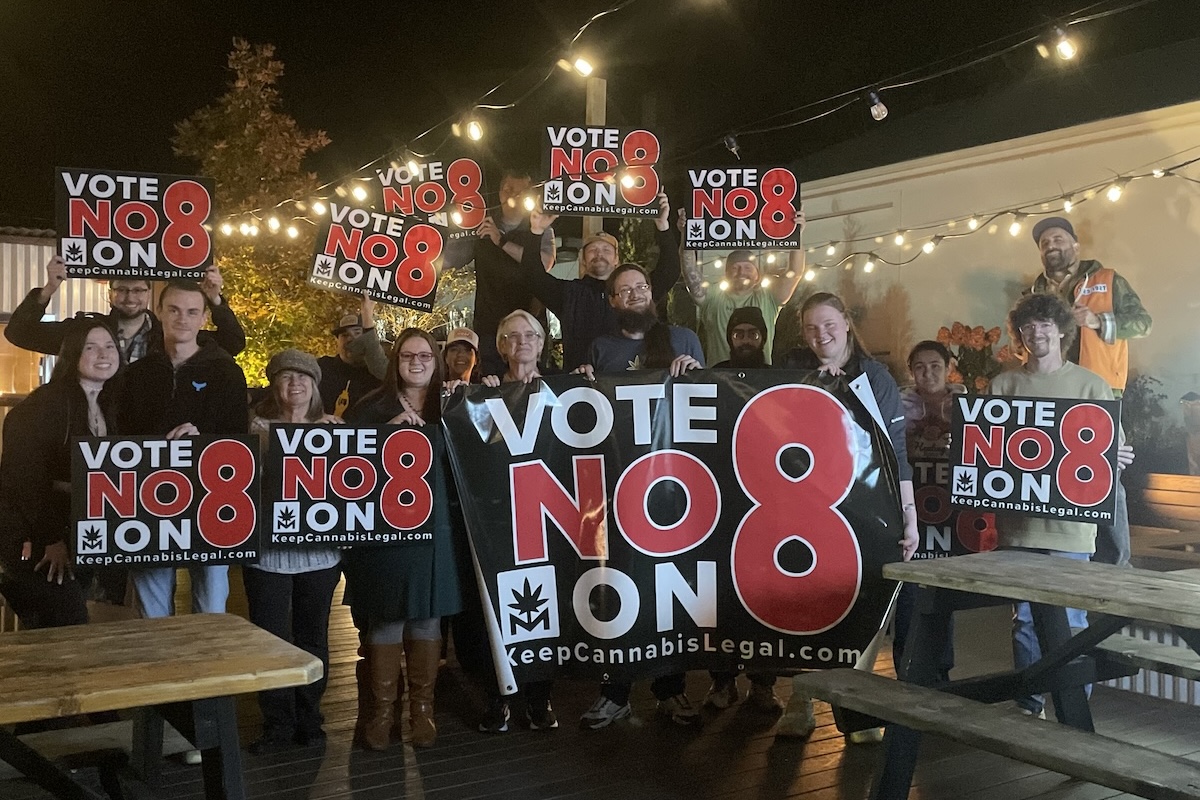
Apparently not, so when local entrepreneur and mythic mountain mover Dave Currier (owner of The Alley BBQ & Bowling and partner in Seaside Cannabis in Orleans) asked us to have a look into Question 8 we, the fairmindedest of them all, poured a glass of tequila, turned our laptop just-so out of the sunlight’s glare, and gave both sides a day in court. What did we find?
We’ll lay out the case for both sides as we’ve looked over it. We’ll remind you that the people of the area to whom this pertains have spoken and need to be respected as having done so. We’ll weigh the value of sentimentality against growing industry. We’ll look into how Prohibition for other drugs has worked out in the past and we’ll try to walk between the raindrops to find out, ultimately, who really stands to benefit from this vote. With establishment trust at an all time low, we don’t quite think some discreetly funded out of town monolith will take the Acela north and start rearranging our furniture.
Opening Statement
It’s no surprise that the folks on the No side who are hoping to maintain the status quo are local residents, business owners, even many MA politicians, who no doubt love the bottom line they’re seeing. These retail dispensaries are now hauling in $1.65+ billion dollars annually.
The regulated adult cannabis industry’s retail shops are holding 18,000+ employees across the state (some sources report as many as 27,000). Not too bad of a shake for an industry still in their single digital years of operation.
The opposition, the Yes men, are notably not led by any in-state figureheads. Yes, you can find some MA folks aligned but the brunt of the push comes from out of state, from Virginia specifically, from a group called SAM Action led by Kevin Sabet. SAM is the abbreviation for Smart Approaches to Marijuana, an organization founded by Sabet himself.
Sabet, not yet 50, has a long history of government involvement and has worked under 3 administrations going back to the Clintons. So during his 20th year, Sabet was testifying on the floor in front of Congress. He’s always been an avid anti-drug guy, which no doubt led him to found this organization, SAM Action. The organization itself is a 501(c)(4) – which just means it’s a non-profit but the contributions to that organization are NOT tax deductible.
That’s not to be confused with a 501(c)(3), because donations to those orgs ARE tax deductible. Kevin knows about this because he also heads up a 501(c)(3) - it’s called SAM. No Action, just SAM. Huh, that’s interesting. The interesting part of course being that 501(c)(3)s can contribute to 501(c)(4)s without always needing to know how that money is spent. I wonder if SAM contributed any money to SAM Action? We'll get to that.

Anyway, SAM Action is leading the charge up here on this Vote Yes on Question 8. By leading the charge we mean they’re the main contributor of funds. And by funds we mean SAM Action has raised 3.73 million dollars to push up north in an effort to repeal the retail cannabis shops 6 states away from their mailing address. That’s $100k more than the campaign has reported spending, which makes the YES campaign, for all practical purposes, SAM Action’s campaign. Wonder what’d motivate them to do that?
Well, they put it this way “legalization has produced public-health and public-safety harms that outweigh its benefits.” Yeesh, that sounds pretty altruistic. But remember, Chief Sabet did also work in several administrations, so he can craft a slick piece of speak yeah?
I mean, SAM Action is telling you they want things to be healthier, who wants to take them off that moral high ground? And they don’t like what “legalization” has done but they’re not stepping in with adjustments to the flourishing market regulations, they want to simply cut the head off of it. Slippery.
The State of Expenses
The MA cannabis industry is doing well right? As we pointed out: annually it’s $1.65 billion in revenue, $280 million in tax revenue, approximately $50 million in local tax revenue, more than 18k jobs, ~400 open shops and growing.
When you look back further to when the legalization passed and went into effect in November of 2018, you’re talking about more than $10 buh-buh-billion dollars in gross revenue against almost $2 billion in state taxes.
if SAM Action took the head offa that growing boy, are they gonna stick around for the bodyfall? Or are they gonna call for updates on the long distance line?
While we can hear the hearts & minds song SAM Action has started singing, we gotta stick around until the last verses to find out where they anticipate these tens of millions of dollars rerouting to. I mean, great strings section, dork, but where are these 18,000 people going to work now? Do they understand the cost of living in Massachusetts is 2nd highest in the country? It’s hard to make money enough to live, nevermind squirreling some away until some organization down the coast gets a different idea.
Who’s going to inherit these leases to these grow-houses, warehouses, and retail shops? How will these investors recoup the start up costs of applications and initial licenses and annual licensing, registering a new employee …
Want to change up your ownership? Maybe move locations? How about submitting for a reno in the space you already pay rent for? They’re even charged for packaging and labeling a product.
These are sunk costs, gone costs, flushed costs. To quote the great Sam Jackson “I smoked the goddam color TV!”
We have to respect the absolute stones it takes anyone to open a business right? The time and blood equity effort they invest, all the time knowing profitability is years away. But they do it for the belief in what they’re selling, the service they’re providing, the pure drive of not wanting to work for someone else. We need people like this in the world; we cannot allow the spirit of these righteous gamblers to be punished for the simple reason they got into the game.
We understand Sabet & Co have public-safety concerns, we appreciate that, and we’ll address them. How they saw those public-safety issues from Virginia is something we can get to later but for now, let’s hear from the No on 8 side of the hall. Per their platform, they maintain that a Yes on this Question “would jeopardize jobs, state and local revenue, consumer protections, and progress toward reducing the unequal consequences of marijuana prohibition.”
Dave Currier backs this up – while the industry is going well, and certainly growing into the sunlight, it’s not all blooming buds. They pay a lot in taxes and, when it comes to the Federal side of the ledger, they’re on the hook, due to Section 280E, far more than any other retailer not trafficking in your favorite vices (legal or not).
Cannabis businesses aren't merely paying taxes on a heavily regulated product. They're operating under a federal tax provision that denies them deductions available to virtually every other legitimate retail business. So while MA plays nice with dispensaries, the Feds only allow Dispensaries to write off the cost of goods sold - expenses like:
- Wholesale cannabis purchases: the documented cost of products bought for resale.
- Direct production costs: qualifying materials and labor involved in cultivating or manufacturing cannabis.
- Certain indirect inventory costs: qualifying production and inventory-related costs that tax rules require or permit to be capitalized.
- Beginning and ending inventory adjustments: used to calculate the cost of goods actually sold during the tax year.
While that doesn’t sound bad, it’s not really a dent when what’s left on the table is considered, recurring, always-on, substantial expenses like:
- Employee payroll: wages, salaries, and other compensation.
- Rent: storefront leases, warehouse space, and office space.
- Utilities: electricity, heating, water, internet.
- Advertising and marketing: promotions, media buys, and advertising expenses.
- Insurance: property, liability, workers' compensation, and business interruption.
- Security: alarm systems, monitoring, and security personnel.
- Professional services: lawyers, accountants, bookkeepers, and consultants.
- Repairs and maintenance: building upkeep, equipment repairs, and maintenance.
- Business travel and vehicle expenses: qualifying transportation and travel costs.
- Depreciation: qualifying deductions for equipment, fixtures, and other business assets.
How far behind the 8 ball do you want to set somebody? And speaking of 8 balls - if you make recreational marijuana illegal again after 8-10 years of clean, structured, measured, commerce, how is that supposed to impact the folks who’ve adopted the actual bodily benefits of THC. Who’ve decided to spare their liver and gotten used to smoking or eating or chewing it instead of taking a xanax or drinking themselves to sleep every night?
How many answers to that can there really be? Repealing legislation doesn't repeal demand. It changes the legal channels through which that demand can be met.
Go Play In Traffic
SAM Action has attempted to plant their “public-health and public-safety” flag in a terra most infirma. Before someone could walk into a retail dispensary and buy what they needed, what did it look like? If you had it good, someone would come by with some bud (gummies?! hardly) in a bag or a plastic receptacle. Or maybe you knew somebody who knew somebody. Was it difficult to get cannabis? Likely not too difficult. The same person who sold to a school teacher would also sell to their students. A niece would find marijuana for her injured uncle through the same person who was moving weight. Or maybe white.
After November 2018, cannabis became a legitimate retail business and you were screened before going inside - similar to, but far in excess of, a liquor store. You bought what you wanted in measure doses with the potency of the substance clearly labeled and priced accordingly. Like a liquor store. And as with liquor, some folks who didn’t qualify for the privilege got their hands on the bounty just the same. This must be what SAM Action is talking about.
And here, the deep end of the pool where SAM Action’s 7 Points on Public Concern swim, is where we found their most potent policy column: Commercial marijuana has caused a drastic increase in Massachusetts ER visits for teenagers with psychiatric conditions.
Yes that’s narrow, yes it’s playing in the margins, no we should not pivot established laws for the many around the unfortunate but real tragedies of the few, but there is something here to be aware of:
This is a legitimate warning signal. We should not minimize it, and we do not. Among adolescents who came to MGH's psychiatric emergency service, both THC detection and cannabis-related diagnoses increased sharply after retail sales began.
But the study does not tell us whether the increase reflects greater cannabis use among teenagers with pre-existing psychiatric vulnerabilities, changes in access, changes in the types of patients arriving at MGH, or some combination of factors. It does not establish that commercial legalization caused the increase.
And it does not establish a fourfold increase in psychiatric emergencies among Massachusetts teenagers generally.
Another claim SAM Action makes is that Cannabis is now the most common drug found in fatal car accidents in Massachusetts. And that sounds pretty heavy. (You really have to give it to them, when you’re spinning them up for bumper stickers, you really can cut to the bone.) But when you step back this one has heavy, dark shades of “died from covid vs died with covid.”
What they maintain here cannot be proven as The Cause of a driver’s crash. Not to say some drivers weren’t under the influence at the time of an accident, but it’s not possible to prove. Ask anyone who’s had to take a piss test for a job - cannabis or THC can stay in your system for up to 30 days when tested by urine. Now, blood tests are a more powerful indicator … but a frequent or even chronic user can carry traces in their blood for anywhere from a week to 30 days. So … did they have a horrible car accident because they were using cannabis 30 minutes ago or 30 days ago. It’s a flashy stat but that dog won’t hunt.
And when you step back to pre-legalization times, you’ll see number which further support the ‘from vs with’ point - have a look here, about flat before at and after legalization:
And truthfully the other 5 pillars of SAM Action’s plan are even less impressive and feel thrown together to rally some well meaning empaths.
Question 8 keeps personal possession and medical marijuana legal, while stopping commercial stores.
We’ve already exhausted the amount of MA residents that leaves in debt and without jobs, in addition to the tax loss the state takes. They will surely come for their pound of flesh regardless and they’ll probably take it off of the newly unemployed while they still have a little left to give..
85% of marijuana users admit to driving after using; more than half drive within an hour.
That number is a surprise since we found an IIHS study showing that 19% of surveyed drivers drove within 2 hours of having drinks while only 3% of surveyed drivers drove within 2 hours of smoking. More detail on where they found these drivers (maybe at a legal dispensary?) would be helpful in assessing the true risk.
Business owners face higher workplace injuries, healthcare costs, and turnover.
You’re likely going to have to search far and wide to find someone who believes it’s ok to be under the influence of marijuana while in the workplace. If you do, you’ll likely find the same tranche of people who think it’s ok to have a couple cocktails and operate the forklift. Again, playing in the margins.
Modern concentrates and edibles are linked to psychosis, severe anxiety, and schizophrenia, particularly in young adults.
There is no doubt that excessive use of high dosage concentrates and edibles can have a negative impact on someone, no arguing that. But the bow they wrap this one in is certainly a clip on. A 2025 systematic review in Annals of Internal Medicine examined 99 studies involving 221,097 participants. Among non-therapeutic studies, 70% reported an unfavorable association between high-concentration THC products and psychosis or schizophrenia. The authors also cautioned that more than 95% of the studies had moderate or high risk of bias, and that research on contemporary products remains limited. Stop playing in the margins.
Every $1 in tax revenue costs taxpayers $4.50 in societal expenses.
This claim is infuriatingly farcical and frankly casts doubt on all other claims and Sabet’s motives as a leader of this program. The proposed number not only stems from a report dating to November 2018 (the month of legalization in MA, so no data around legalized adult use) but the claim is NOT ABOUT MASSACHUSETTS! This ran in the Centennial Institute at Colorado Christian University. FOH with that. We will not allow a Colorado think-tank estimate to masquerade as a Massachusetts taxpayer bill.
•••
And that is where SAM Action hangs their hat - on a series of claims that vary between “correct in the margins and should be noted” to “hey that’s not about legalized marijuana nor is it about Massachusetts.” If it walks like a swine, and it squeals like a swine ...
It’s on these proclamations that the Yes on 8 folks plan to close the doors at retail cannabis shops and watch hundreds of thousands of adults who’ve been legally buying marijuana products and bankrolling a billion dollar industry simply give up their preferences and relinquish their own sense of autonomy cold. Kevin Sabet knows what’s better for you than you do yourself, just shhh for a second.
Now it’s reasonable to think that some folks will give up trying to find it when it proves too difficult and turn back to some other means to accomplish their goal but the ones who have already tried those other means and are certain that this is their substance of choice, they’re not going to just shrink away because somebody with a 703 area code thought it’d be better that way. They’re going to find their cannabis. And since it’s now deregulated and illegal, they’re going to do that out on the street where it could be stepped on, synthetic, laced, or part of some other transaction with folks who’re looking for more of a party.
We do have empirical data on what happens when the government outlaws a substance the public enjoys. It’s worth a look at how that went 95 or so years ago with Prohibition and why even the minimal impact it had on drinkers back then would be more than they could hope for today.
Red Bottom Bootleggers
When the National Prohibition Act took effect in January 1920 it was the culmination of a handful of issues running back 3 or 4 years. It was cited by women's groups as a cause of domestic violence, it had previously been illegal during the first World War because of the toll it took on the grain supply, so it was only a couple of steps before it was outlawed, over President Wilson’s veto, for good.
We won’t go all Ken Burns on this here but the important thing to understand is that when it first went into effect, Prohibition was able to knock back alcohol consumption to 30% of pre-Prohibition numbers, which is significant.
But soon folks figured out how to not only make their own booze but how to get it to whoever else wanted it and in a few years consumption was up to 60-70% of pre-Prohibition levels. Then the Depression hit at the end of 1929 and holding people back from drinking was wishful thinking.
By the time Prohibition was repealed in 1933, people were broke but still managed to be boozing about half as much as they did before the country went dry. By 1942 alcohol consumption was back up to pre-Prohibition levels.
So the country had their vice of choice taken away from them, they figured out how to create bootleg product, how to mobilize and sell that bootleg product, many organized crime figures making a lot of money from the endeavor: gang violence, bribery and corruption became part of the public story of Prohibition. The St. Valentine's Day Massacre in 1929 became an especially notorious example.
And now, the River card: with people out of work and the economy in the gutter, the government, seeing all the money organized crime was bringing in, seeing how distraught Americans were, legalized alcohol consumption again for, among several other, three reasons we should pay attention to:
- Federal and state tax revenue.
- Jobs in breweries, distilleries, restaurants and hospitality.
- A legitimate industry in place of an enormous illicit trade.

Want to really complicate things for SAM Action? Let’s consider that if they got their way and cannabis were to become illegal again, there would be zero downtime while the illicit marijuana market got its collective shit together and were able to supply whoever.
We’d have grow houses doing offbook clearance sales, retail houses cutting deals with new tenants and old customers to keep things moving, and it’d probably bring a bunch of disenfranchised, angry, and newly destitute people together. They’ve a lot of time and a lot of green on their hands - who thinks this is a good idea?
Also, and I think everyone, the cannabis industry or otherwise, senses something a little strange is afoot these days. As cracks start to open up wider in the surface, do we really need to have another round of voting on something that’s already-been-established hamster wheel?
Now we start to pry into the small, shapen, inner layers of the onion. Kevin Sabet knows all of this, so the question becomes, why?
If he knows like we all do that putting retail shops out of business is going to dump customers into the streets to buy their cannabis illegally, why’s SAM Action pushing for it?
If he sees, like we all do, that something may be going down in a hard-to-afford state, as it is, why would he derail a growing industry instead of simply proposing additional regulations to address his concerns at the margins? Especially if we may just end up needing to jumpstart the same industry again if unemployment rises & stagnates and the criminal underworld takes all of the money for themselves and reinvests it in more unsavory ventures.
Why won’t SAM Action disclose their donor list?
Qui Bono
Who is funding Yes on Question 8? A Virginia based organization called SAM Action run by Kevin Sabet. It’s a 501(c)(4) which does not disclose its donors. The org has raised $3.73 million for this cause in Massachusetts alone.
Sabet’s sister organization, SAM ((c)(3))’s own tax filing list SAM Action ((c)(4)) as a related organization, and in 2020 SAM Action’s books showed it owed money to SAM. Meaning there’s no way to know how muchSAM tax-deductible put money into SAM tax-my-donation's organization. Obfuscate obfuscate obfuscate. Squirrel!

Not disclosing his donors really puts us in a spot to start speculating wildly - who DOES benefit from doing away with retail cannabis shops? Who do retail cannabis shops impact? Whose lunch are they eating?
We looked but we can’t find reliable numbers on the alcohol industry’s revenue over the past 8 years or so since retail shops have been in play.
One set of interesting numbers we were able to find were from an industry that was in fact growing over the period that cannabis legalization was coming into its own. Their industry is massive so their growth wasn’t even - meaning while certain parts of their businesses lit up, others deflated.
That’s why this pharmaceutical chart is so interesting - we can see the areas in which their industry was not on uppers:
It is no small thing to point out that any cannabis petroleum alternatives (aka pharmaceuticals) were waning. Would it be out of the question to suspect that maybe that industry has taken some action to stop the bleeding? Who knows? Ever heard of Preston Tucker? That man had a dream once.
There’s the more devious suspicion that putting drugs back onto the black market would inflate the street drug scene, resulting in any number of rotten results: more violence, impure cannabis resulting in health issues and/or death, theft, etc. Who benefits from that? Any who may want to use the idea of unsafe streets to impose greater measures to ensure safety - like TSA started out to be 25 years ago.
Or could it be that SAM Action is truly evil and wants to hamstring the business owners & venture capitalists who put up a lot of good money in the state by essentially flushing their investments and thereby weakening a quadrant of wealth. Additionally, evidence points to the cannabis industry being valuable as an employment and taxation mechanism, so if the wealth has been stripped from the interested and capable entrepreneurs, maybe a SAM Action donor steps out of the shadows with some undisclosed backing to open dispensaries again a few years from now with competition licking their wounds. Impossible?
Of course, this could all just be what it’s purported to be as well: a Virginia based organization flush with $3.73 million dollars and so activated by the fear that cannabis is a social ill and public-health hazard that they’re willing to call in from out of state with a check to run over the governor and the 400+ businesses on their way to restoring a drug free state.
Since SAM Action is moved to look out for civic responsibility for user irresponsibility, they must have a strong platform against alcohol right? Maybe contributions to MADD or some messaging on their website about how drunk drivers kill 12,000 people a year (about 33/day). But there is nothing. SAM Action’s site stands tall “don’t let the Marijuana Industry become the next Big Tobacco” but it doesn’t say how many drivers under the influence of nicotine crash cars or end up in the ER.
Maybe we’ll find out someday that SAM & SAM Action are less interested in driving Civic Action than Civic DistrAction by keeping us voting on things we already passed, by finding ways to keep driving the wedge or, worse, encouraging people from down the street to have an opinion on what’s in your cupboards. It’ll be interesting to see how this shakes out at the ballot boxes on Tuesday, 03 November. Go vote your conscience and keep your neighbors in mind - whatever that means to you.
Sources
Massachusetts Secretary of the Commonwealth — 2026 Question 8 voter guide
Massachusetts Cannabis Control Commission
Massachusetts Cannabis Control Commission — $10 billion sales milestone
MassVoter — Question 8 campaign finance
GBH — Who’s funding the effort to repeal legal recreational weed?
CommonWealth Beacon — 2026 Question 8 marijuana repeal
NBER — Alcohol Consumption During Prohibition
CDC — Mortality Statistics, 1929
Cannabis Business Times — Healey’s NO endorsement
Cannabis Business Times — 60+ lawmakers endorse NO
Cannabis Business Times — civic organizations endorse NO
Argandykov et al. — Recreational cannabis legalization and pediatric exposures in Massachusetts
The Vineyard Gazette — Question Eight Takes Aim at Marijuana Sales
WBUR — A closer look at the marijuana health concerns behind Question 8
Massachusetts Department of Public Health — Marijuana Research / Baseline Health Study
National Academies / NCBI Bookshelf — Effects of total bans on alcoholic beverage consumption and proxy outcomes
CommonWealth Beacon — Question 8 surpasses Question 3 as most expensive ballot question
Massachusetts Legal Resources — The Case Against Question 8, and the Number That Complicates It
Massachusetts Legal Resources — Who Is Paying for the 2026 Massachusetts Ballot Questions?
Massachusetts Legal Resources — Who Is Behind Question 8? One Virginia Nonprofit Has Supplied 98.6% of the Money to End Legal Marijuana Sales
Massachusetts Cannabis Control Commission — Massachusetts Marijuana Establishments Hit $10 Billion in Gross Sales
Congressional Research Service — The Application of Internal Revenue Code Section 280E to Marijuana Businesses
U.S. Code — 26 USC §162, Trade or Business Expenses
U.S. Code — 26 USC §280E
Congressional Research Service — Section 280E and Marijuana Businesses
IRS — Marijuana Industry Frequently Asked Questions
Massachusetts Cannabis Control Commission — License Fees
Massachusetts Cannabis Control Commission — Renewing Your License
Massachusetts DOR — TIR 23-6: Tax Provisions in Certain Massachusetts Legislation Enacted in 2022
Visual Capitalist — Mapped: The Cost of Living in Every U.S. State (2026)
Massachusetts EOPSS — Impaired Driving Data (2018)
NHTSA — Massachusetts FY2016 Highway Safety Plan
American College of Medical Toxicology — Interpretation of Urine for THC Metabolites (2020)
Peng et al. — Residual Blood THC Levels in Frequent Cannabis Users: Systematic Review (2020)
Foo et al. — Effects of Legalizing Recreational Cannabis Sales on Cannabis Use and Cannabis-Related Disorder Among Psychiatric Emergency Presentations (2026)
Massachusetts DESE — 2011–2021 YRBS Prevalence Trends Report
Massachusetts DESE — 2019 YRBS Data Tables
Massachusetts Cannabis Control Commission — Medical Marijuana Establishments
CCC — Open Data Catalog
CCC — February 2026 medical-market update
AAA Foundation — Driving Under the Influence of Alcohol and Marijuana: Beliefs and Behaviors, 2013–2015
IIHS — Survey of U.S. Drivers about Marijuana, Alcohol, and Driving (2016)
CDC — Impaired Driving Facts
Centennial Institute — Economic and Social Costs of Legalized Marijuana (2018), full report
SAM — Written Testimony to U.S. Senate Judiciary Subcommittee, 26 July 2022
Illinois Economic Policy Institute — Reject the Dubious Claims Made by the Centennial Institute (19 December 2018)
Rittiphairoj et al., Annals of Internal Medicine (2025)
Federal Judicial Center — Prohibition in the Federal Courts: Timeline
Congressional Research Service — The Twenty-First Amendment and the End of Prohibition, Part 2
Bradford & Bradford, 2018
Medicaid prescription study, 2022
Commercially insured pain prescriptions, 2025
Commercial insurance claims, 2025
CHIA — Commercial Prescription Drug Use & Spending, 2022–2024
MassBio — 2026 Industry Snapshot
Massachusetts Lobbying Disclosures — AMEND archive
Massachusetts OCPF — Campaign Finance Data Downloads